Water, clarity and algae
Black algae in a pool
Black algae forms dark, slightly raised spots that do not brush away. It roots into the surface, so treatment has to get beneath its protective layer.
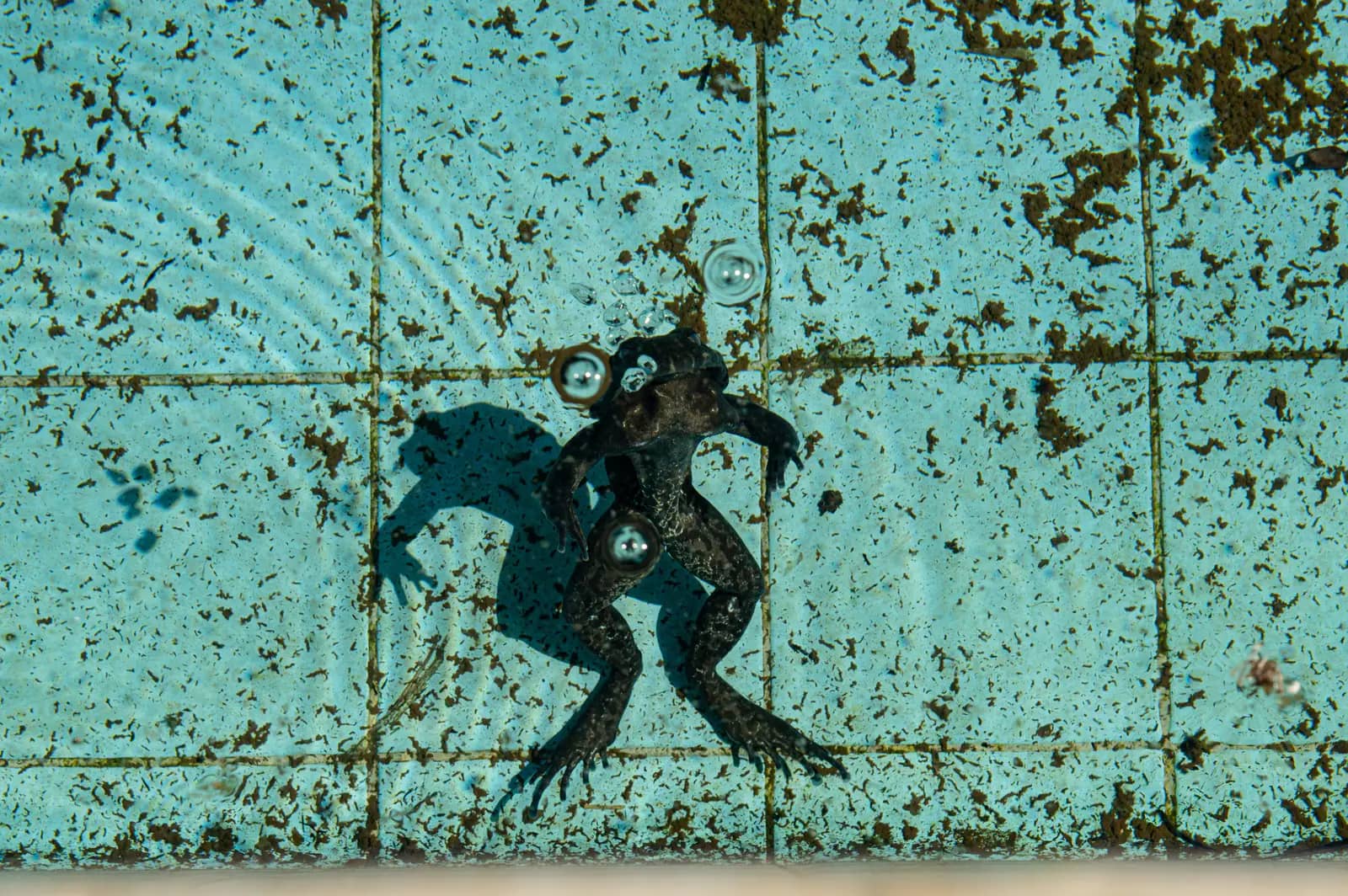
Black algae grows in small dark blue-black spots, usually in grout lines, rough plaster and around fittings where the surface gives it a hold. Each spot has a protective outer layer and roots that reach into the finish. That combination is why routine chlorine and a soft brush barely change it, and why spots reappear in the same places after a treatment that looked successful.
Water guides explain what a reading or a symptom means and the order in which to correct it.
Clearing it is a process rather than a single dose: break the outer layer, apply treatment directly to each spot, hold chlorine higher than normal, and repeat until the spots stop returning. Because the roots sit inside the grout, persistence over several days usually decides the outcome.
The short version
Rooted into the surface
Grout and rough plaster give it a hold, so spots return where roots survive.
Protected by an outer layer
Firm brushing is needed to let chlorine reach the algae.
Persistence decides it
Treatment is repeated over several days rather than done once.
How black algae is treated
Breaking the layer
A stiff brush suited to the finish — firmer for plaster, gentler for glass mosaic — scores each spot before treatment.
Treating each spot
Chlorine or a suitable algaecide applied directly to the spots, so the dose is concentrated where the algae is.
Holding chlorine higher
Raised chlorine with pH in range is maintained and spots are brushed daily until no new growth appears.
Preventing a return
Avoid low-chlorine periods
Black algae establishes itself when chlorine runs out, often during holidays.
Brush grout lines regularly
Routine brushing stops new spots rooting.
Clean shared equipment
Brushes and cleaners used in an affected pool can carry it to the next.
Common questions
Can black algae damage the pool?
Over time its roots can roughen grout and plaster, which is one reason to treat it early.
Why is it so hard to remove?
Its outer layer and roots protect it from routine chlorine levels.
Will re-grouting fix it?
Badly affected grout may need attention later, but the algae is treated first so it does not colonise the new grout.
Related pool care guides
- A pool that turned green while you were awayAnother water problem with a related cause.
- Reading a pool water test resultAnother water problem with a related cause.
- Restarting a pool that has been left unusedPool care for a related situation.
- Treating a green pool or draining itA related choice about how the pool is looked after.
This guide sits under green pool recovery. Browse all pool care guides. We look after pools at homes and commercial properties across Dubai.
Ask about your pool
A clear photograph and your latest test reading are usually enough for a useful first answer.
Phone
+971 56 181 0106Talk through what the pool is doing and book a time for us to see it.
WhatsApp
Send a messageThe easiest way to send photographs of the pool and plant room.
Next step
Dark spots on the pool surface?
Send a close-up photo. We will tell you whether it is black algae and plan a treatment that reaches the roots.