Water, clarity and algae
Calcium hardness in pool water
Too much calcium leaves scale. Too little lets the water dissolve grout and finishes. Evaporation pushes most Dubai pools towards too much.
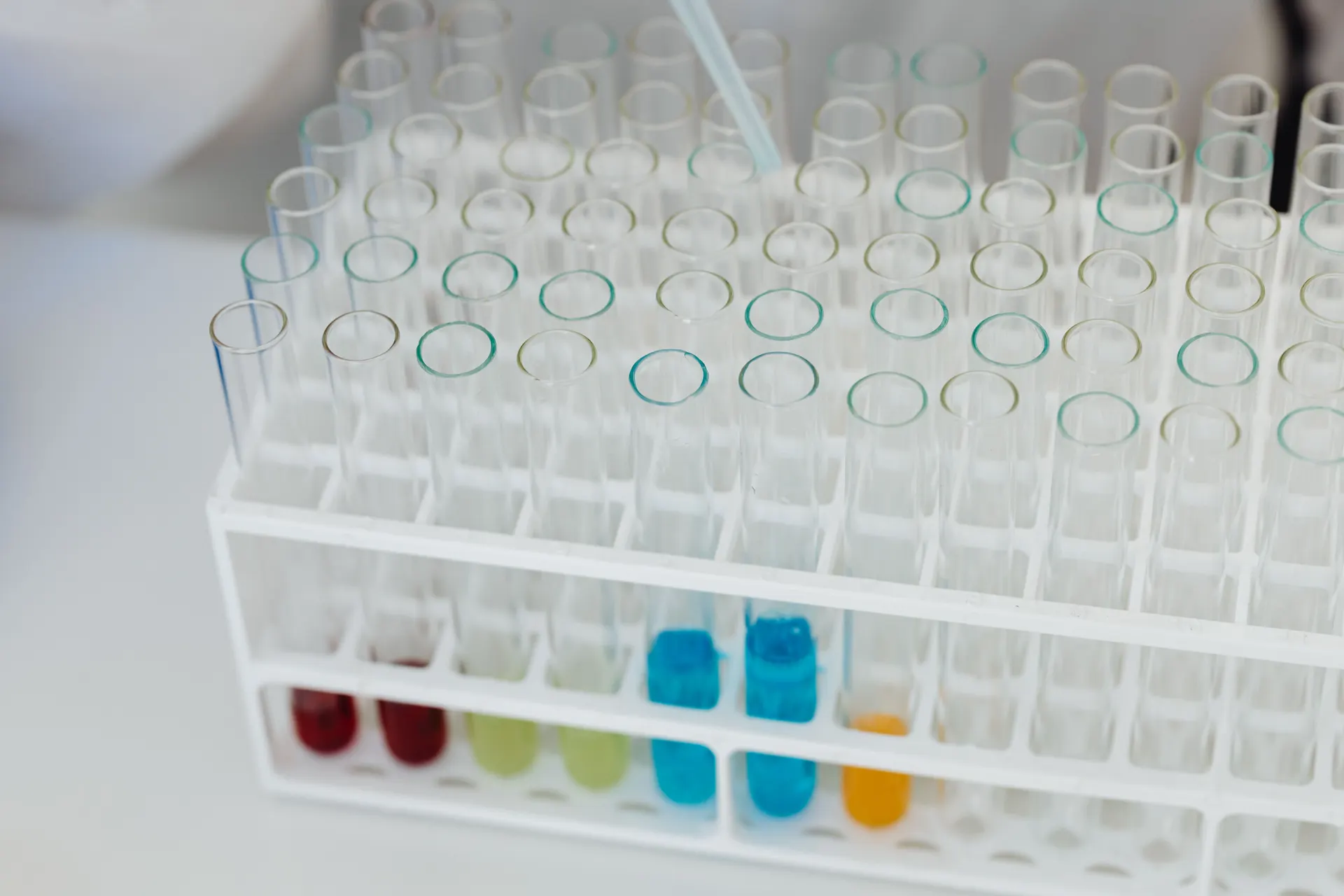
Calcium hardness measures the dissolved calcium in the water. When the water holds more than it can keep dissolved — helped by high pH and warm temperatures — calcium comes out as white scale on tiles, inside pipes, on salt cells and in heater exchangers. When there is too little, the water tries to take calcium from grout and cement-based finishes instead.
Water guides explain what a reading or a symptom means and the order in which to correct it.
Evaporation is the main driver in Dubai. Water evaporates but calcium stays behind, and each top-up adds more. Over time hardness creeps up, especially in hot months and in pools with spillways or infinity edges.
The short version
Evaporation concentrates calcium
Water leaves; calcium stays, and top-ups add more.
Heat and pH make it worse
Warm water and high pH make scale form more readily.
Equipment suffers first
Salt cells and heater exchangers scale up before tiles show it.
Managing hardness
Keeping pH in range
Lower pH within the recommended band reduces scale formation.
Scale inhibitors
Sequestering products help keep calcium in solution, especially for salt pools.
Partial water replacement
When hardness is very high, replacing part of the water is the practical way to reduce it.
Signs hardness needs attention
White crust at the waterline
A rough, grey-white line is usually calcium scale.
Salt cell scaling quickly
Frequent cell cleaning points to scale-forming water.
Cloudiness after shock
Calcium-based shock in hard water can cloud the pool.
Common questions
Can calcium hardness be lowered with chemicals?
Not easily. Dilution with fresh water is the usual approach; sequestrants help hold calcium in solution.
Is scale harmful to swimmers?
Not directly, but it roughens surfaces and damages equipment.
How often should hardness be tested?
Monthly is common, more often in summer or after frequent top-ups.
Related pool care guides
- Stabiliser and cyanuric acid in poolsAnother water problem with a related cause.
- Why a pool smells of chlorineAnother water problem with a related cause.
- Test strips or a liquid test kitA related choice about how the pool is looked after.
- Stabilised or unstabilised chlorineA related choice about how the pool is looked after.
This guide sits under pool water treatment. Browse all pool care guides. We look after pools at homes and commercial properties across Dubai.
Ask about your pool
Describe the pool and the question. We will answer directly, and say when the honest answer is that nothing needs doing.
Phone
+971 56 181 0106Talk through what the pool is doing and book a time for us to see it.
WhatsApp
Send a messageThe easiest way to send photographs of the pool and plant room.
Next step
Seeing scale on tiles or equipment?
Send a photograph of the waterline and your latest test results. We will check hardness and suggest how to manage it.