Water, clarity and algae
Organic stains in a pool
Leaves, palm fronds, flowers and dates left on the pool floor leave brown or green shadows behind. Most of them lift with chlorine and brushing.
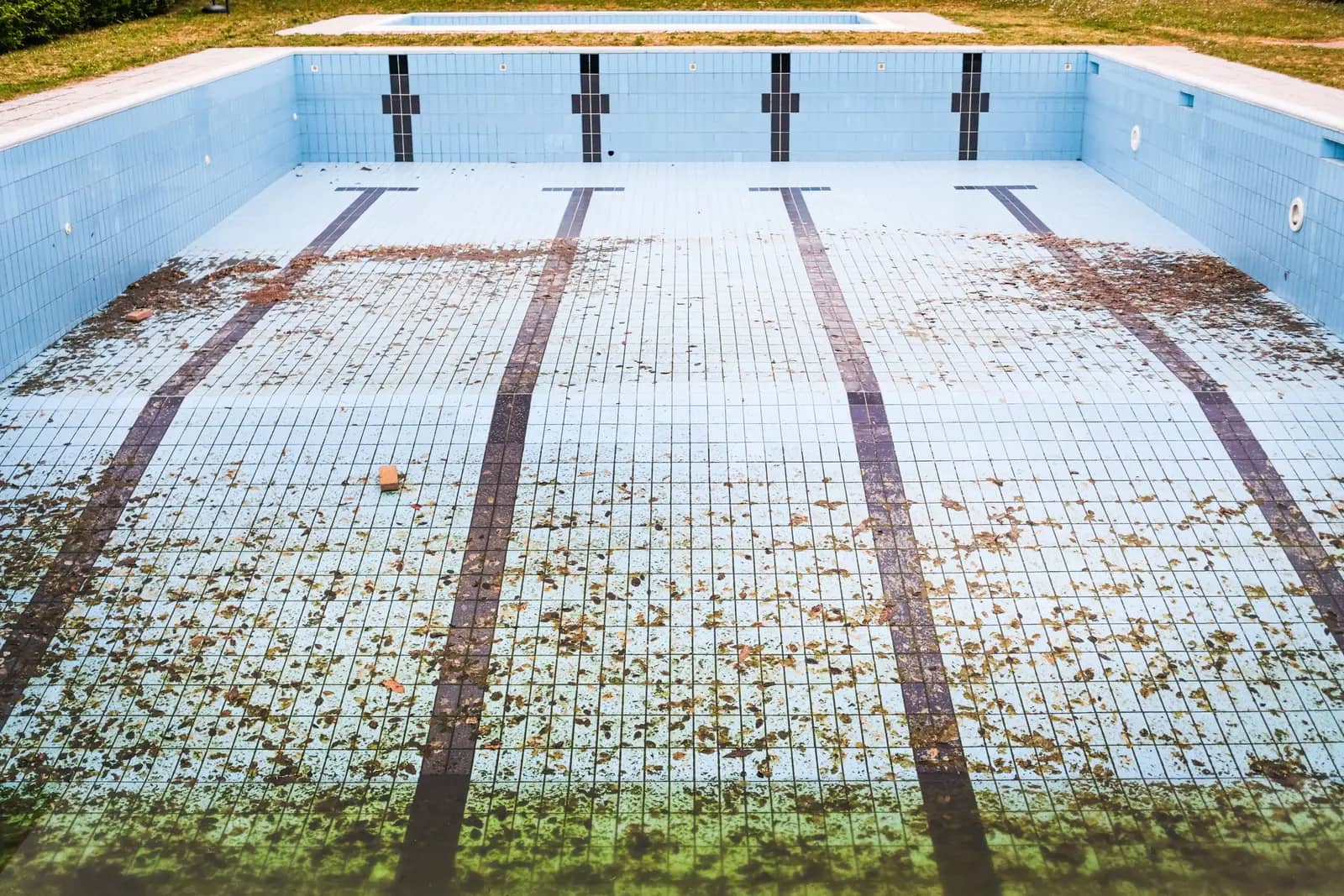
Organic stains form when plant material sits on the pool surface long enough for its tannins and pigments to leach into the finish. Villa pools under palms, bougainvillea and ornamental trees see them most often, and they tend to appear on steps, benches and in corners where circulation is weak and debris settles out of reach of the skimmer.
Water guides explain what a reading or a symptom means and the order in which to correct it.
Organic stains behave differently from metal stains. They bleach under chlorine, so a stain that fades when chlorine is applied near it is organic. The longer a stain is left, the deeper it sets into grout and porous finishes, which is why removing debris promptly matters more than any stain product.
The short version
Debris left for days causes them
A leaf that is netted out promptly rarely stains. One left over a weekend in hot water often does.
Chlorine lifts them
Raising chlorine, or applying it carefully close to the mark, bleaches organic staining where it would not shift a metal stain.
Low-circulation areas are the risk
Steps, ledges and corners collect debris; better jet direction and more frequent brushing reduce stains there.
How organic stains are treated
Confirming the stain type
A quick spot test with chlorine on one side and a vitamin C based stain remover on another shows whether the mark is organic or metal.
Spot and general treatment
Isolated marks are treated locally; widespread staining is handled by raising chlorine across the pool and brushing daily until they fade.
Protecting the finish
Brushes and products are matched to the surface — tile, plaster, pebble or glass mosaic — so treatment does not scratch or bleach the finish itself.
To prevent new stains
Skim and net more often during leaf drop
Seasonal flowering and palm frond drop are when stains start; extra skimming then saves stain treatment later.
Empty baskets before they fill
A full skimmer basket stops pulling debris off the surface, so leaves sink instead.
Consider a cover
A cover during heavy leaf fall keeps most debris out altogether.
Common questions
Why do stains appear in the same spot every time?
Debris settles where water movement is weakest. Redirecting a return jet towards that area often reduces both debris and stains.
Can organic stains be prevented completely?
Not under heavy tree cover, but prompt debris removal and steady chlorine keep them light and easy to lift.
Will a pressure washer remove them?
It can damage grout and some finishes. Chemical lifting and brushing is gentler and usually enough.
Related pool care guides
- Foam on pool waterAnother water problem with a related cause.
- Looking after a pool after heavy rainAnother water problem with a related cause.
- Keeping a pool clean when dogs swimPool care for a related situation.
- Protecting the pool during garden worksPool care for a related situation.
This guide sits under pool cleaning. Browse all pool care guides. We look after pools at homes and commercial properties across Dubai.
Ask about your pool
A clear photograph and your latest test reading are usually enough for a useful first answer.
Phone
+971 56 181 0106Talk through what the pool is doing and book a time for us to see it.
WhatsApp
Send a messageThe easiest way to send photographs of the pool and plant room.
Next step
Stains appearing on the pool floor?
Send a photograph of the marks and tell us which trees are near the pool. We will confirm the stain type and suggest treatment and a cleaning routine.